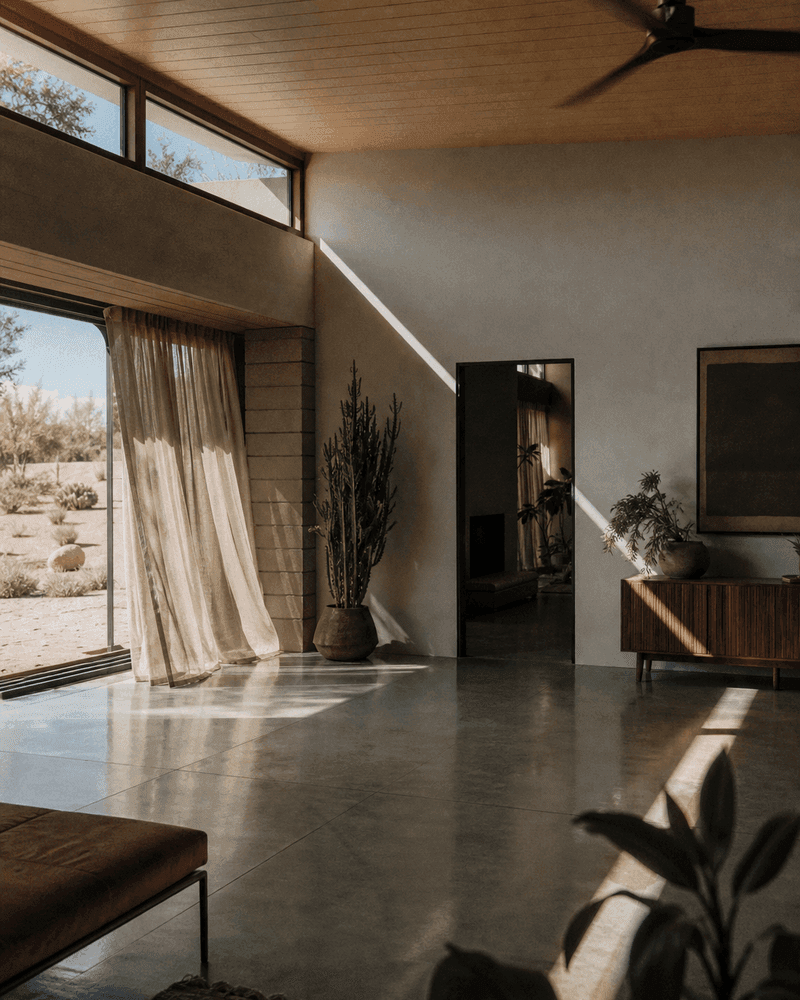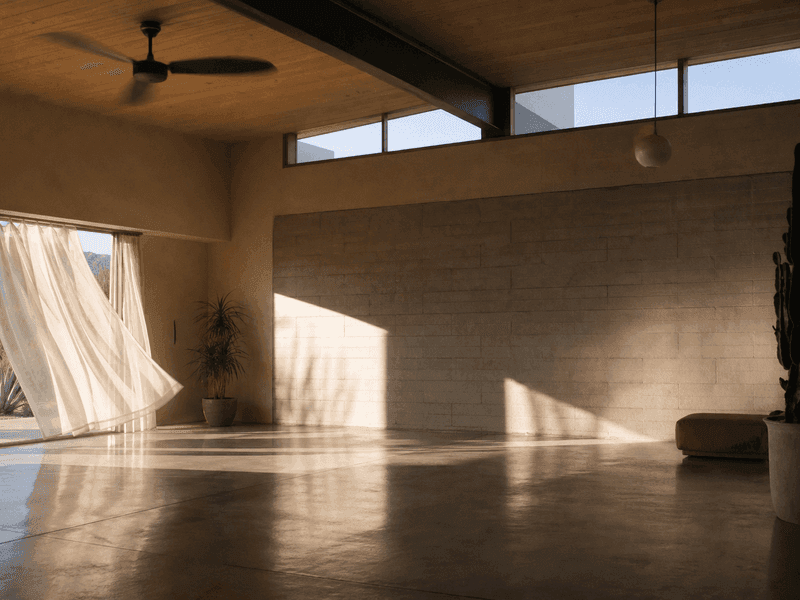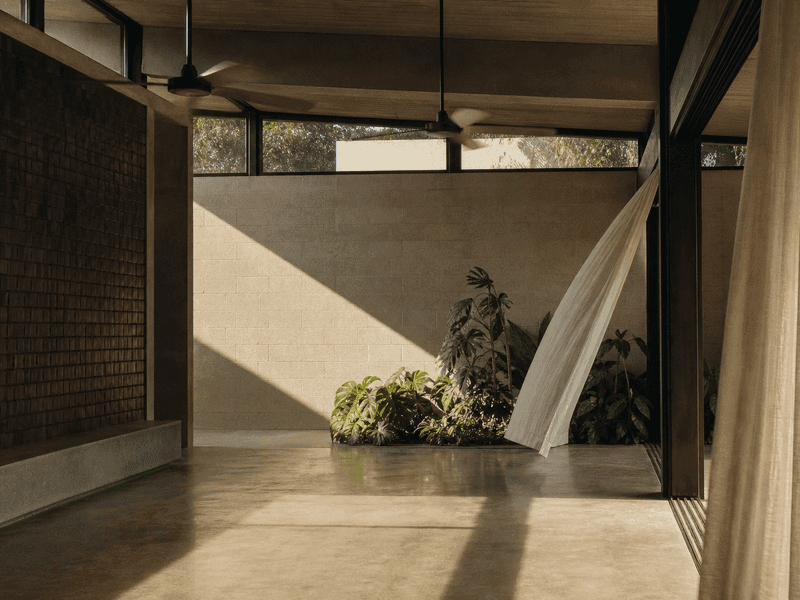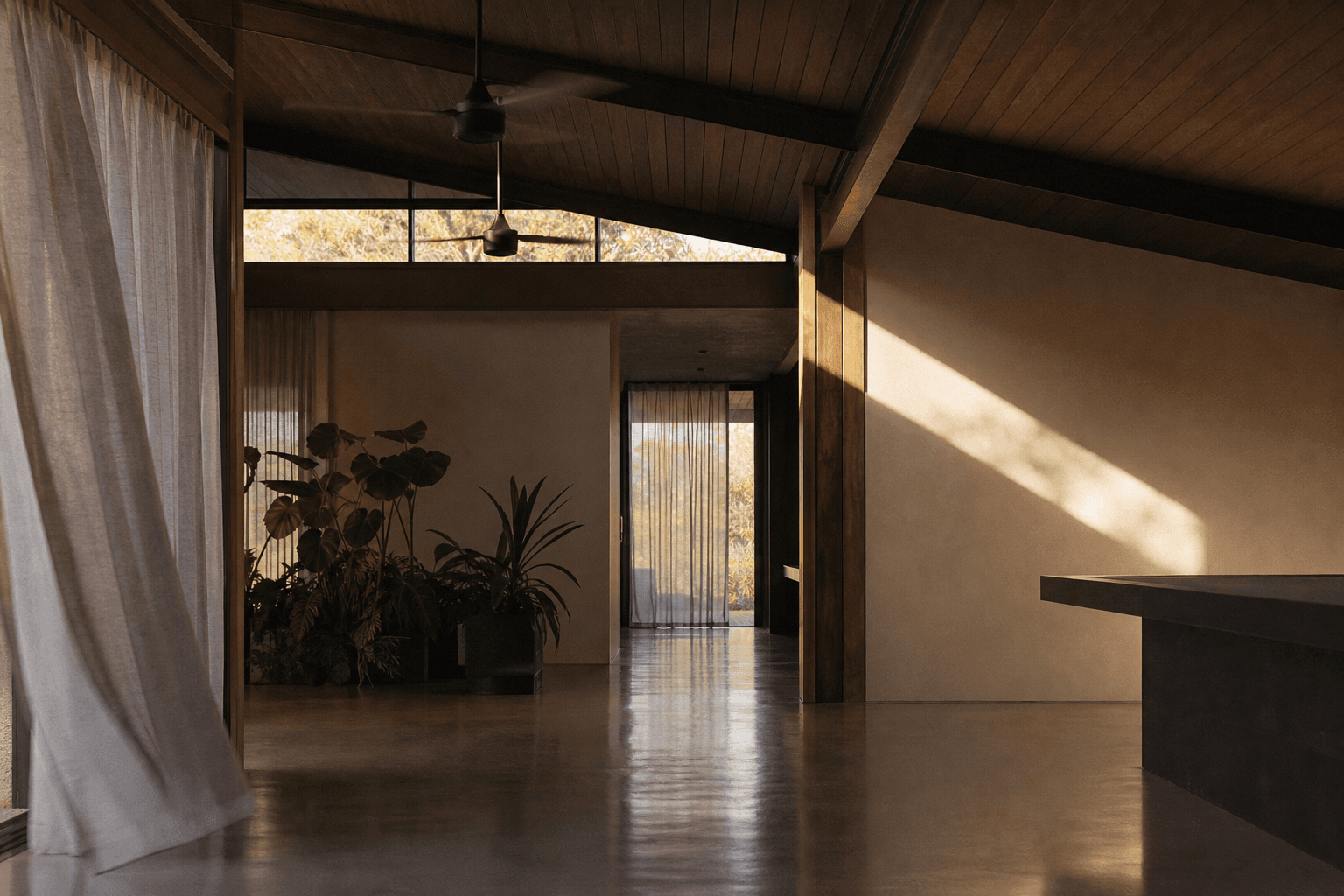
The average high in Phoenix in July is 106 degrees. This is not a design problem that can be solved with better air conditioning, though better air conditioning helps. It is a problem of architecture — of how a building is oriented, how its skin is detailed, how it manages the transition between conditioned interior space and the outdoor environment that most of its occupants would like to spend time in between May and October. The best Arizona architects have always understood this. What has changed in the past five years is that their clients, at the upper end of the custom home market, have started to understand it too.
01The New Standard
Climate-responsive architecture in Arizona is not a single design language. It is a set of performance requirements that can be expressed in a variety of aesthetic directions, from the angular geometry of contemporary desert modernism to the thick-walled, shaded-courtyard grammar of the Sonoran vernacular. What these approaches share is an orientation toward the site rather than away from it — a recognition that a house in Scottsdale or Paradise Valley is not a California beach house that has been moved east, but a structure that has to earn its relationship to a specific climate.
The features that define this work in 2026 are not individually new. Deep overhangs, recessed windows, thermal mass, high-performance glazing, and operable shade systems have been part of the Arizona architect's toolkit for decades. What has shifted is the expectation that they will all be present, coordinated, and performing — not as options selected from a sustainability menu but as the baseline from which a design begins.
02The Passive Systems
The fundamental tool of climate-responsive Arizona design is shading, and the fundamental expression of shading is the overhang. A deep roof overhang — typically 3 to 6 feet on south and west elevations — blocks direct solar gain during the high-sun summer months while allowing lower winter sun to penetrate and warm interior spaces. The physics are elementary, but the design implications are significant: deep overhangs require longer structural spans, affect the proportions of every elevation, and demand that the architect think about shade as a three-dimensional element rather than an afterthought.
Recessed windows work in coordination with overhangs, pulling glass back from the plane of the facade to create a secondary layer of self-shading. On a west-facing wall — the most punishing exposure in Phoenix — a window recessed 18 inches behind a masonry reveal can reduce solar heat gain by 40 percent or more compared to a flush installation.
Thermal mass — the use of dense materials like concrete, stone, and adobe to absorb heat during the day and release it slowly at night — functions as a passive temperature-moderating system that reduces the load on mechanical cooling. In a well-designed Arizona home, the thermal mass of the building envelope does a portion of the work that the HVAC system would otherwise do alone.
The best Arizona architects have always understood this problem. What has changed is that their clients have started to understand it too.
03The Indoor-Outdoor Problem
The most requested feature in high-end Arizona custom homes — by a wide margin, according to most architects and builders working in the market — is seamless indoor-outdoor connectivity. This is partly an aesthetic preference and partly a practical one: Arizona's climate is genuinely excellent for much of the year, and a house that does not engage with it is leaving a significant portion of its livable area unused.
The design problem is that indoor-outdoor connectivity, as commonly executed, is thermally expensive. A 20-foot pocketing glass wall that opens the living room to a covered outdoor space is a luxury. It is also a large hole in the building envelope, and managing the thermal consequences of that hole is where good design separates itself from expensive design.
The solutions are layered. The covered outdoor space acts as a thermal buffer — neither fully inside nor outside, but shaded and therefore significantly cooler than an exposed patio. Ceiling fans, misting systems, and operable louvered shade structures extend the comfort window of the exterior space. High-performance triple-pane glazing reduces conductive heat transfer when the wall is closed. And the mechanical system is designed from the start to account for the load created when the wall opens, rather than treating it as an anomalous condition.
04The Build Cost
The additional cost of building a climate-responsive home rather than a standard luxury home in Arizona is difficult to isolate precisely, because the better architects in the market no longer present it as an add-on. The performance features are embedded in the design from the start, and the cost is distributed across the project.
A rough estimate, based on conversations with Phoenix and Scottsdale architects, is that a fully climate-responsive high-end custom home runs 8 to 15 percent more to build than a comparable home that does not address climate performance systematically. On a $2.5 million build, that is $200,000 to $375,000. The return on that investment appears in lower utility costs over the life of the house, in a longer useful season for outdoor spaces, and in the increasing premium that buyers in the luxury market are placing on homes that perform as well as they look.
For resale, the signal is clear: in the Paradise Valley and North Scottsdale markets, buyers in the $2 million-plus tier are asking about energy performance in their initial conversations in ways they were not five years ago. A house that was built with serious attention to its climate is a house that can answer those questions.
05The Firms to Know
Among the architectural firms working at the intersection of climate performance and high-end residential design in Arizona, several have developed particularly deep expertise in the problem. Trinity Homes AZ, Fratantoni Luxury Estates, and Starwood Custom Homes have each built substantial portfolios of projects that address climate seriously without reducing the architecture to its performance specifications.
For homeowners beginning a custom home project in 2026, the most useful screening question is not 'do you do passive solar?' but 'how do you think about the west elevation?' The answer to that question will tell you whether the architect is treating climate as a constraint to be managed or as a design driver to be embraced.