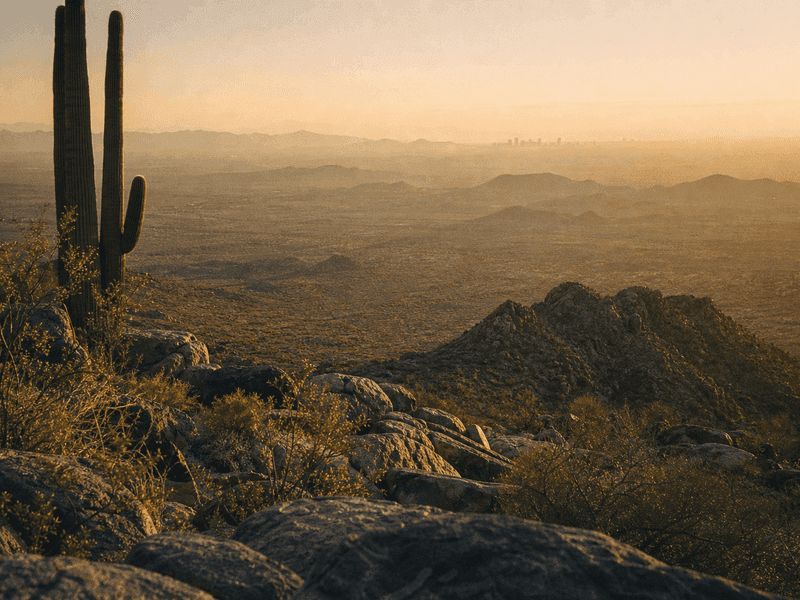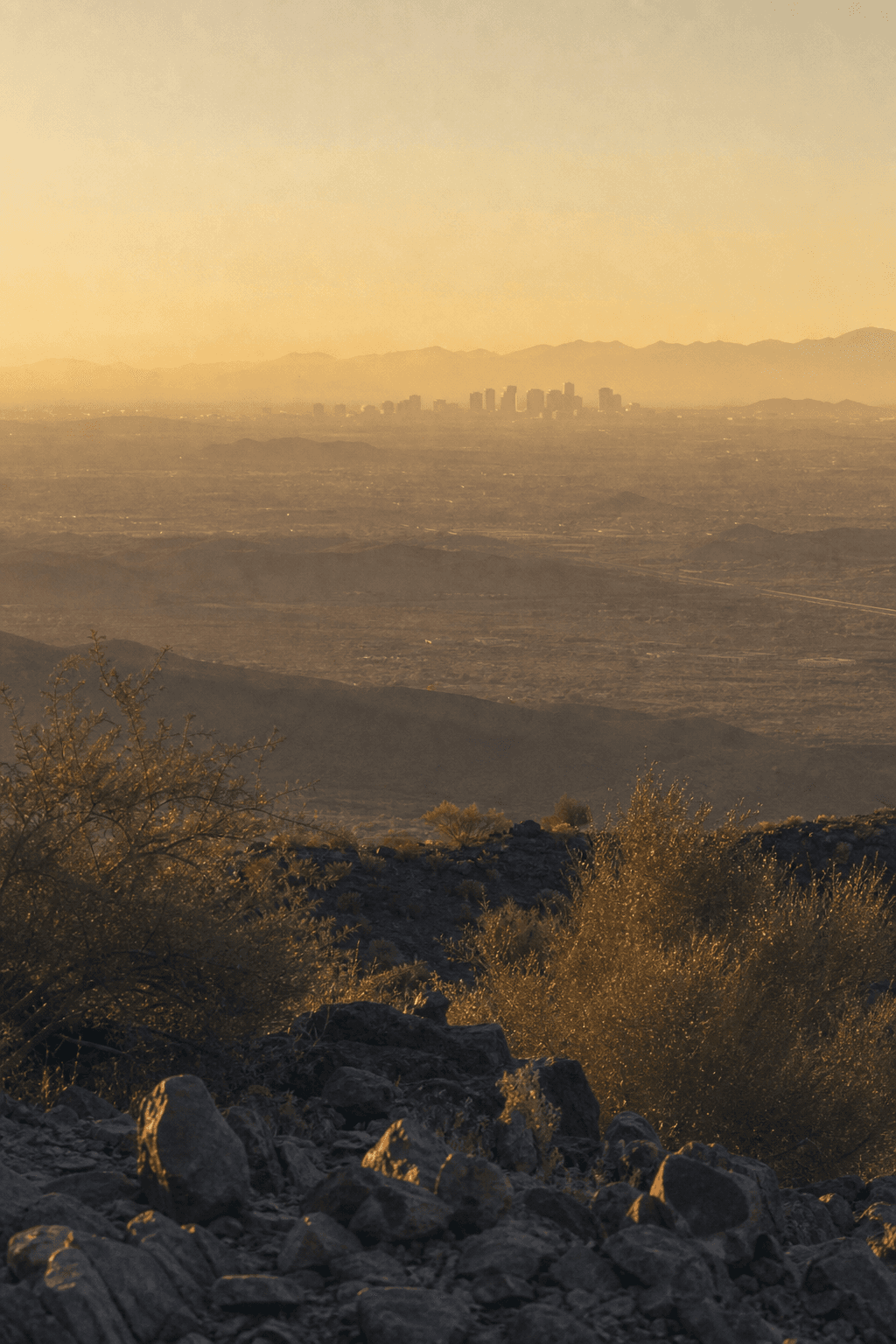
Phoenix ranked fourth most polluted city in the United States for ozone in the 2025 State of the Air report. It also ranked twentieth for year-round particle pollution, down from ninth the previous year. The story the data tells is not simple: Phoenix air quality has gotten better on some measures, worse on others, and the clinical significance of the remaining problems depends heavily on who you are and when you are outside.
01Ozone: The Persistent Problem
Ozone is a secondary pollutant — it forms when nitrogen oxides and volatile organic compounds react in sunlight and heat. Phoenix has both in abundance. The primary source of the nitrogen oxides is vehicle exhaust, and the metro area's sprawling, car-dependent geography means a large vehicle miles traveled baseline, which means a large NOx output, which means ozone.
The American Lung Association grades metropolitan areas on ozone days. Phoenix currently earns a failing grade on this measure. For most healthy adults, high-ozone days produce mild symptoms: eye irritation, reduced lung function, somewhat impaired athletic performance. For people with asthma or other respiratory conditions, the effects are more significant. The epidemiological literature on ozone is consistent: there is no threshold below which ozone exposure has zero health effect.
02Particulate Matter and Dust
Particulate pollution in Phoenix comes from two sources with different health profiles. Fine particles (PM2.5) come primarily from combustion — vehicles, industry, wildfire smoke — and are the particles associated with the most serious cardiovascular and respiratory outcomes. Coarse particles (PM10) include windblown dust, and Arizona generates a lot of it.
Haboobs produce acute PM10 spikes that are visible and alarming but brief. The chronic exposure concern is not the dramatic dust wall days but the routine accumulation on high-traffic days when pollution is less visible and less noticed. Maricopa County's air quality monitoring network measures both, and the data is publicly available through the ADEQ and updated daily.
Phoenix's ozone ranking is failing. That matters more if you have asthma or run outside in the afternoon. It matters less if you stay indoors with filtered air. The key is knowing which category you're in.
03Who Is Most at Risk
The clinical literature on air pollution exposure identifies consistent high-risk groups: children whose lungs are still developing, adults with asthma or COPD, people with cardiovascular disease, pregnant women, and older adults. For these populations, high-AQI days are not abstract — they are associated with measurable increases in emergency department visits, asthma attacks, and adverse birth outcomes.
For healthy adults without respiratory conditions, the practical risk from Phoenix air quality is lower than the city's national rankings suggest. The ozone metric that produces the 'fourth most polluted' ranking counts unhealthy days over a three-year period. Many of those days are at levels that affect sensitive populations rather than the general public. That nuance matters when reading the headline.
04What You Can Actually Control
The ADEQ publishes daily air quality forecasts by pollutant and geographic zone. The practical use of this data is straightforward: on days forecast at 'Unhealthy for Sensitive Groups' or above, limit outdoor exertion, especially in the afternoon when ozone peaks. If you have asthma, have your medication accessible. If you exercise outdoors regularly, pay attention to the ozone forecast in summer the same way you pay attention to the heat index.
Indoor air quality is more controllable for most Phoenix residents. MERV-13 filters in HVAC systems capture a meaningful portion of fine particulates. Running the HVAC fan on 'circulate' during high-pollution days increases filtration. These are not sophisticated interventions. They do work.
The air quality data for Phoenix is real, and some of it is bad. It is also specific to location, time of day, season, and health status. Reading it carefully produces a more useful picture than reading the ranking. The fourth most polluted city for ozone is not the same thing as a city that is dangerous to breathe in. It is a city where certain people, at certain times, need to be thoughtful about their exposure. Sources: lung.org State of the Air 2025, azdeq.gov, maricopa.gov