The backyard in Arizona is not an afterthought. For roughly eight months of the year, it is a functional room. The other four months, it is the best room in the house. Getting it right requires thinking differently than homeowners in other climates, where the primary concern is weather protection. Here, the primary concern is heat management, and every design decision flows from that.
01Shade first, everything else second
The design sequence for an Arizona backyard starts with shade structures. A ramada, the term used in the Southwest for a freestanding shade structure, or a covered patio extension off the house creates the livable zone. Without overhead protection, a summer afternoon in the backyard is not an option. With it, evaporative cooling, misters, or fans can extend comfortable outdoor time to temperatures well above 100 degrees.
Permanent patio covers in Arizona typically run $12,000 to $35,000 depending on size, materials, and integration with the house roofline. Steel-framed structures with corrugated polycarbonate or insulated panel roofing have become a popular alternative to traditional wood framing, offering longer spans and better heat resistance.
02The outdoor kitchen evolution
Outdoor kitchens in Arizona have moved beyond the basic built-in grill. The current standard in a Scottsdale remodel includes a 36 to 42-inch built-in gas grill, a side burner, a built-in refrigerator, a sink with running water, and a bar-height counter with seating. Higher-end projects add pizza ovens, ceramic cookers, and full outdoor refrigerator-freezer combinations.
Materials matter in the desert. Stainless steel is standard but gets hot enough in direct summer sun to be uncomfortable to touch. Concrete countertops, sealed against the elements, absorb less radiant heat and offer more design flexibility. Teak and ipe hardwoods are used for bar fronts and seating but require seasonal oiling to prevent cracking in dry desert air.
The outdoor kitchen trend in Arizona is running about five years ahead of the national market. Our clients expect full appliance packages and they expect it to look like an indoor kitchen that happens to be outside.
03Pools: the non-negotiable
A home without a pool in Phoenix or Scottsdale is a different product category than a home with one. In neighborhoods above $600,000, pool-free homes take longer to sell and sell at a discount. The pool is not luxury; it is infrastructure. The question is what kind.
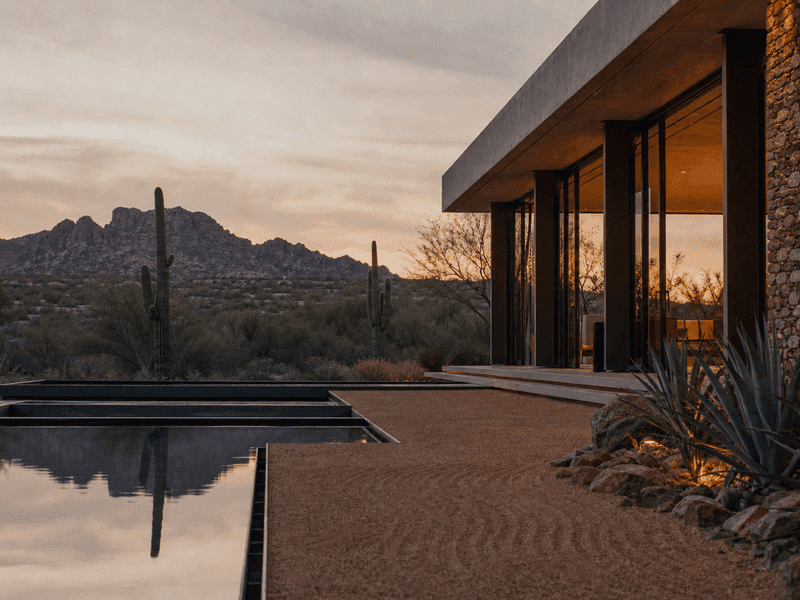
Negative edge pools, which create the visual effect of water extending to the horizon, have become standard in North Scottsdale custom builds. The engineering cost premium over a conventional pool edge runs $15,000 to $30,000. Shallow sun shelves, also called tanning ledges, are included in the vast majority of new Arizona pool designs. App-controlled pool automation adds $3,000 to $8,000 and is essentially expected.
04Landscaping for the desert
Water-wise landscaping combining decomposed granite, boulders, and drought-tolerant plants is the baseline expectation in Arizona backyards. High-quality artificial turf runs $15 to $22 per square foot installed in the Phoenix market and provides a maintenance-free green surface that tolerates pet traffic without the water consumption of natural grass.
Lighting design has become sophisticated in Arizona outdoor spaces, where evenings from October through April are the peak use season. Landscape lighting that illuminates cacti and boulders from below, LED strip lighting along covered patio soffits, and pendant lighting over outdoor kitchen islands have become design expectations rather than upgrades.
05Budget structure for a full renovation
A complete Arizona backyard renovation for a typical 2,500 square foot lot breaks into three tiers. An entry-level renovation with a concrete patio, shade sail, basic landscaping, and above-ground spa runs $40,000 to $65,000. A mid-range renovation adding a permanent shade structure, built-in grill, and in-ground pool runs $120,000 to $180,000. A premium renovation with negative edge pool, full outdoor kitchen, automated systems, and landscape lighting runs $250,000 to $400,000 or above. The climate makes each tier a better investment here than in most other American markets.