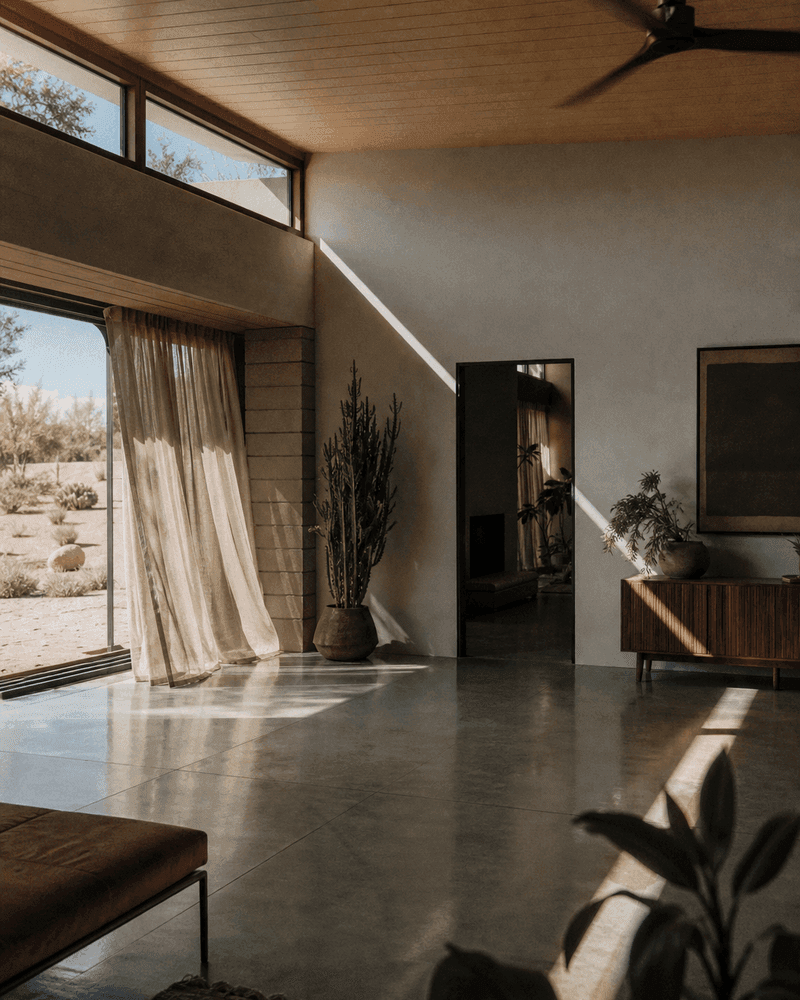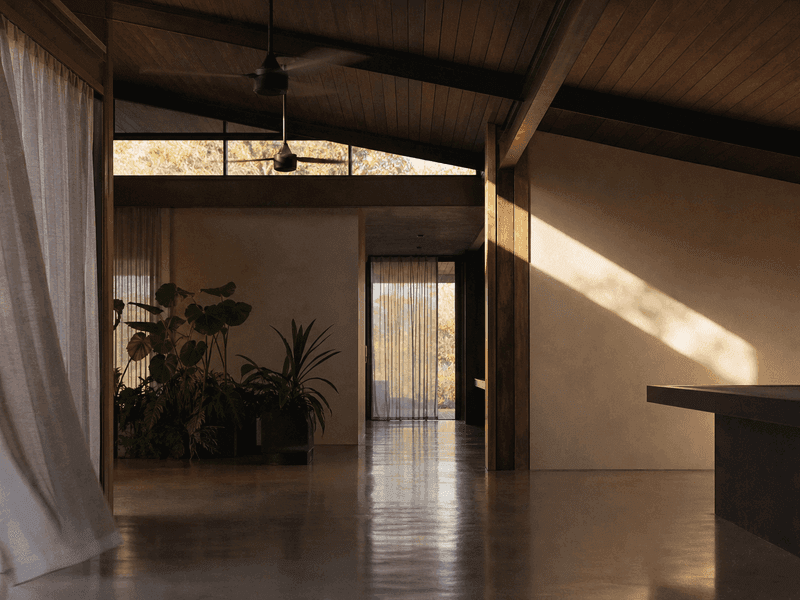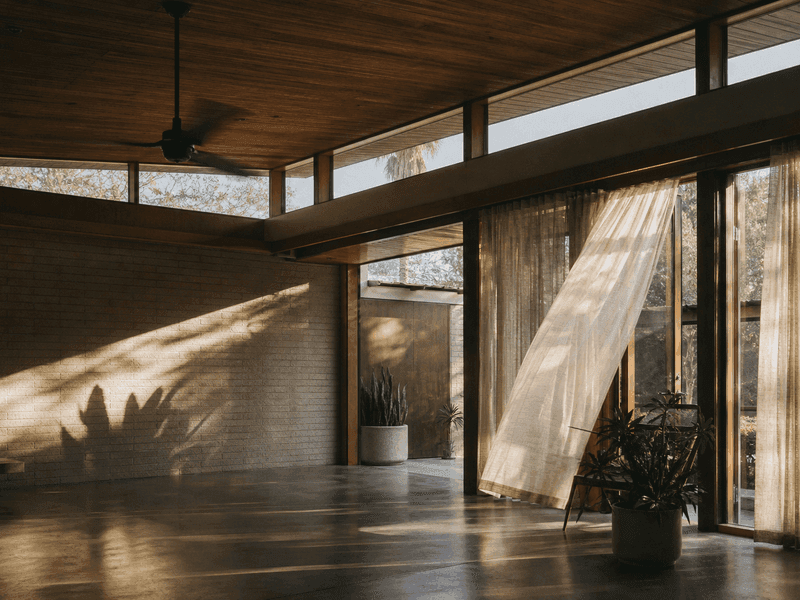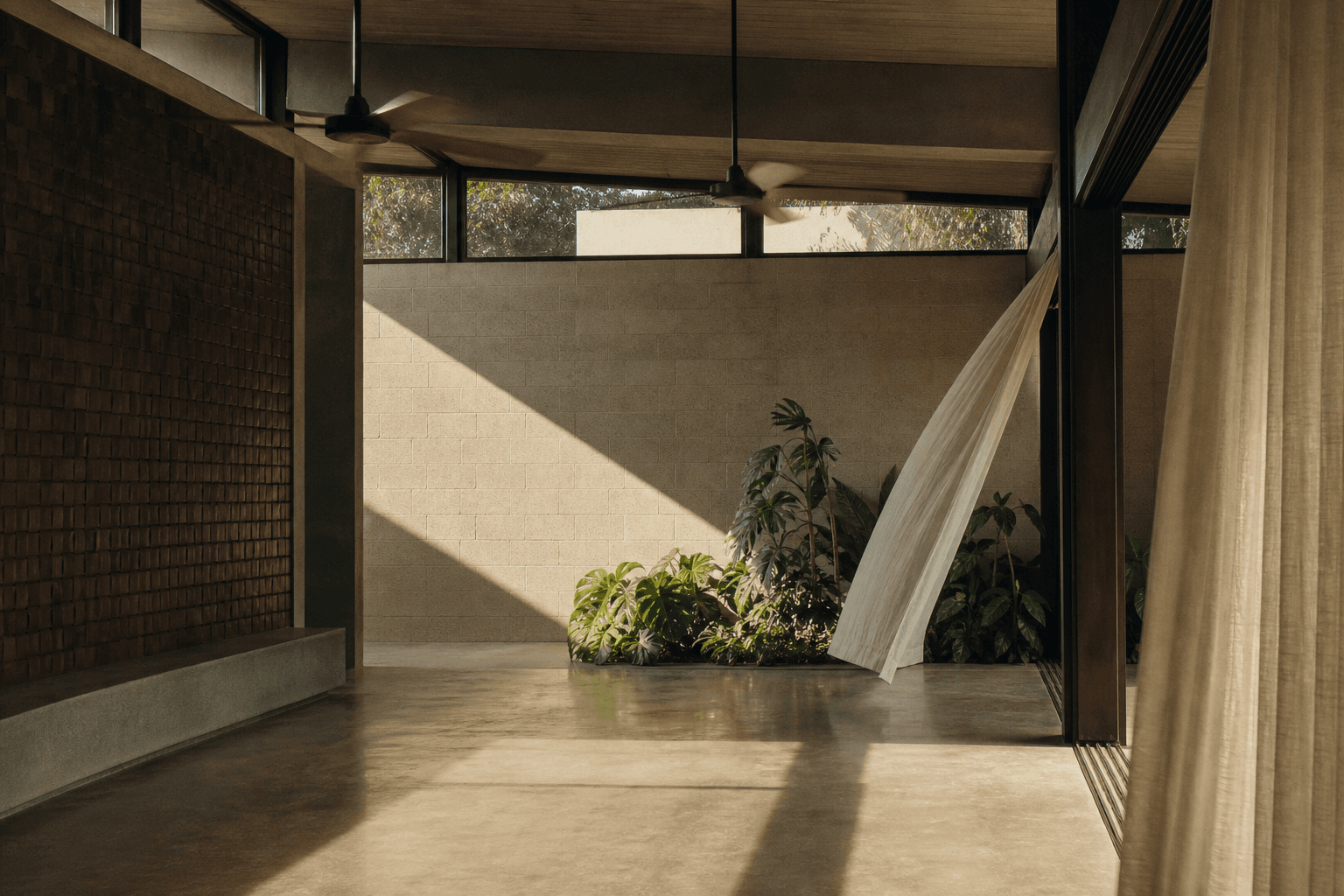
A building material that performs adequately in Chicago or Portland can fail in Phoenix. The combination of extreme UV radiation, temperatures that exceed 115 degrees Fahrenheit on roofing surfaces, dramatic daily thermal cycling, and infrequent but intense monsoon rainfall creates conditions that expose weaknesses in materials not designed for the Sonoran Desert. Selecting the right materials is not cosmetic; it is structural.
01Roofing: where heat does the most damage
Concrete tile roofing is the dominant material on Phoenix and Scottsdale homes for sound reasons. Clay and concrete tile maintain structural integrity under UV radiation and high surface temperatures, resist wind-driven debris, and carry fire ratings appropriate for foothills communities near the wildland-urban interface. Surface temperatures on dark tile can exceed 170 degrees in summer, which is why low-slope and flat roofing uses different approaches.
Flat roofs on modern Arizona homes typically use spray polyurethane foam with an elastomeric coating. SPF roofing insulates and waterproofs in a single system and, when maintained with recoating every five to seven years, performs reliably in desert conditions. TPO membrane is increasingly common in commercial construction and gaining adoption in residential flat-roof applications.
02Exterior walls: what survives the desert
Stucco remains the dominant exterior wall finish in Arizona residential construction. Three-coat stucco over a masonry or wood frame substrate resists the thermal expansion and contraction cycles that crack paint and fiber cement in the desert climate. Properly applied and sealed stucco requires minimal maintenance and can last 25 to 50 years before requiring significant attention.
Thin stone veneer and brick have become more common as accent materials in Arizona custom construction. These materials perform well in Arizona but require attention to mortar joint integrity, as thermal cycling can cause cracking that allows moisture intrusion during monsoon events. Some materials that succeed in other climates create maintenance cycles here that stucco and tile simply avoid.
The homes that age the worst in Arizona are built with materials that weren't designed for this climate. Wood siding, certain fiber cement products, high-moisture-absorption materials create maintenance cycles that stucco and tile simply don't.
03Windows: the thermal envelope's weakest point
Windows are the primary thermal performance vulnerability in Arizona homes. A single-pane window has an R-value of approximately 1. A wall assembly with proper insulation carries R-19 to R-30. The disparity means that undersized or poorly specified windows drive air conditioning loads far beyond what insulation and roofing alone deliver.
Low-E glass coatings that reflect infrared radiation while admitting visible light have become standard in Arizona window specifications. Dual-pane low-E windows with argon fill represent the baseline for new construction. Triple-pane windows are increasingly specified in higher-end Arizona homes, reducing heat gain substantially at a cost premium of $20 to $50 per square foot.
04Insulation: more matters here than most places
Spray foam insulation in roof assemblies has become the performance standard for Arizona homes seeking low air conditioning loads. Closed-cell spray foam applied to the roof deck from the interior creates a conditioned attic that dramatically reduces the solar heat gain driving afternoon cooling loads. Attic temperatures in a conventionally insulated Phoenix home can exceed 150 degrees in summer, radiating heat into living spaces throughout the evening.
A spray-foam conditioned attic maintains temperatures close to indoor air temperature throughout the day. The cost premium for spray foam over blown-in insulation in an existing attic runs $3,000 to $8,000 for a typical home. Payback period in Arizona utility savings typically runs four to seven years.
05Outdoor and pool deck surfaces
Outdoor hardscape material selection in Arizona is constrained by one critical variable: surface temperature in direct summer sun. Dark concrete and dark stone can reach 180 degrees or above, making them genuinely hazardous for bare feet. Light-colored concrete, travertine, and cool-deck coating, a textured spray-applied surface developed specifically for Arizona pool applications, are the primary choices.
Travertine pavers have become the premium Arizona pool deck material. Their natural porous surface dissipates heat more effectively than sealed concrete, keeping surface temperatures 20 to 30 degrees cooler than sealed alternatives. The cost premium over stamped concrete runs $8 to $15 per square foot installed, a premium most Arizona pool owners consider well-justified by the months of barefoot use it enables.